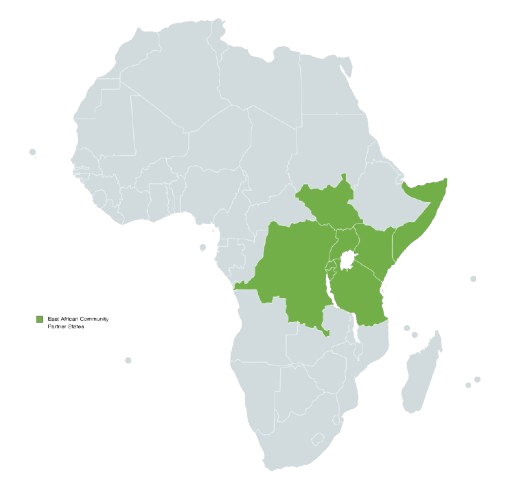
Our dataset includes information about 3 East African Countries, Somalia, Kenya, and Tanzania. It lists specific commodities that give us insight about the country’s food security based on the prices of these commodities. More specifically, the dataset has sixteen columns. The first column is an automatically generated index. The second column details the date of data collection. Column C, admin1, is the first-level administrative region (e.g., state/province), while column D, admin2, is the second-level (e.g., district/county). Columns E, F, and G detail the market’s name and geographic coordinates. Columns H and I identify the category and specific commodity. The J column shows the measurement unit. Columns K refer to price flags or indicator for any special notes about price quality. Column L are the price types (e.g., wholesale, retail). Columns M and N capture the currency and listed price, and the O column shows the price converted to USD. Finally, the last column records the country where the data was collected.
This information is highly valuable for analyzing the factors that lead to food security or insecurity. We can compare these countries’ commodities and standardized food prices over time and pick out important global or local events. For example, in the year 2020, there is expected to be a spike in food prices worldwide (COVID-19, shortage in suppliers and workers). We can find other, smaller events through this method.
Although the exact data collection methodology is not listed, the data is compiled by the World Food Programme, which tends to gather data from the VAM Resource Centre by monitoring. Primary data is the main source for most food security assessments, with key practices including the development of questionnaires and the training of enumerators to ensure data quality. The data is then distributed through the Humanitarian Data Exchange (HDX), an open platform facilitating data sharing across crises and organizations. HDX aims to make the discovery and utilization of humanitarian data for analysis easy, with a continuously expanding collection of datasets that have been accessed by users from more than 250 countries and territories.
The World Food Programme is the “world’s largest humanitarian organization saving lives in emergencies and using food assistance to build a pathway to peace, stability, and prosperity, for people recovering from conflict, disasters and the impact of climate change.” They have 23,000 staff worldwide with a presence in over 120 countries and territories. They work to provide food for people displaced by conflict or disaster, help communities find solutions to challenges they face, enhance nutrition for women and children, support smallholder farmers, and more initiatives related to food assistance. WFP works with governments, other United Nations agencies, non-governmental organizations, private companies, and others.
While the current dataset offers valuable information about goods purchased, prices, currencies used, and the timing of purchases (month/year), it lacks a standardized measure for comparison, such as USD. Additionally, it does not account for factors like purchasing power or the average income levels of the countries involved. This missing information is critical for accurately assessing the cost of living, which is essential for addressing the issue of food security.
The division of the dataset into columns such as country, commodity, price, and market reflects the WFP’s focus on tracking food price trends across regions. However, this structure omits critical contextual factors like household income, local purchasing power, or nutritional value of the commodities, which are essential for understanding food security comprehensively. By formulating food security primarily through market prices, the dataset implicitly aligns with economic-centric ideologies, potentially overlooking socio-cultural dynamics or inequities affecting access to food. If this dataset were the sole source, systemic causes of food insecurity and individual lived experiences would remain overlooked.