Annotated Bibliography
1) Abdallah, B., Fekete-Farkas, M, & Lakner, Z. (2021). Exploring the Link between Food Security and Food Price Dynamics: A Bibliometric Analysis. Agriculture, 11(3), 263. https://doi.org/10.3390/agriculture11030263
The article analyzes research on food security, focusing on topics like food prices, climate change, health, and nutrition. The authors argue that more studies now explore how food security affects health and stress the need for research on how price changes impact nutrition. This connects to studies on how economic factors shape food security and policies. However, while the article gives a good overview of research trends, it does not explain how these factors are linked in detail. It also only uses studies from one database, which may leave out important research, making its findings less complete unless supplemented by other sources.
2) Bahta, Y. T., & Mbai, S. (2023). Competitiveness of Namibia’s Agri-Food Commodities: Implications for Food Security. Resources (Basel), 12(3), 34-. https://doi.org/10.3390/resources12030034
The article evaluates the competitiveness of Namibia’s agri-food commodities and their implications for food security, utilizing metrics like Revealed Comparative Advantage (RCA) and Lafay Index (LFI). The authors argue that Namibia’s agri-food sector is not heavily dependent on international trade, with limited direct implications for food security. They emphasize that labor and land productivity negatively affect competitiveness, whereas GDP per capita and land productivity are significant drivers of food insecurity. This argument aligns with research questions addressing the structural challenges of Namibia’s agricultural sector and how these factors impact food security, particularly through trade dynamics. However, while the study effectively assesses competitiveness at a national level, it does not sufficiently address urban-rural disparities or intra-country variations in food accessibility, which limits its application to localized food security contexts. Additionally, it overlooks the critical issue of price spikes and affordability, which are essential to understanding the full scope of food security challenges in Namibia.
3) Brown, M. E., & Funk, C. C. (2008). Climate. Food security under climate change. Science (American Association for the Advancement of Science), 319(5863), 580–581. https://doi.org/10.1126/science.1154102
The article argues that climate change will have significant and direct impacts on agricultural and food systems all around the globe in the coming decades. The authors emphasize that some of the most profound effects of climate change will be on these systems. The article is important because it highlights the urgency of addressing climate change to ensure global food security, emphasizing the need for adaptive strategies in agricultural practices. Many sources are used to strengthen each point made in the article; mostly other academic titles, books, and published scholarly articles. This resource is particularly relevant to our research question exploring the effects of climate change on food prices and security around the world. It provides a foundational understanding of how climate-induced changes in agriculture can lead to fluctuations in food availability and affordability, therefore inducing analyses of food price stability and food security in vulnerable regions.
4) Etea, B. G., Zhou, D., Abebe, K. A., & Sedebo, D. A. (2019). Household Income Diversification and Food Security: Evidence from Rural and Semi-Urban Areas in Ethiopia. Sustainability, 11(12), 3232-. https://doi.org/10.3390/su11123232
The article examines how having multiple income sources improves food security in Ethiopia’s Ambo district, showing that households with diversified incomes have better food access. The authors highlight the importance of promoting non-farm income opportunities to reduce food insecurity. This provides valuable insights for policymakers. This study strengthens the understanding of economic resilience in food security research, aligning with findings that financial stability helps households withstand food shortages. It focuses on real-world income strategies and offers practical solutions for improving food security in rural and semi-urban settings.
5) Headey, D., & Martin, W. (2016).The Impact of Food Prices on Poverty and Food Security. Annual Review of Resource Economics, 8, 329-351. https://doi.org/10.1146/annurev-resource-100815`-095303
This article examines how changes in food prices affect poverty and food security. The authors argue that higher food prices can benefit the rural poor by increasing demand for farm labor, leading to higher wages. They suggest that sustained increases in food prices have often benefited the poor and likely contributed to faster global poverty reduction from the 2000’s onward. This perspective aligns with research exploring the complex relationship between food prices and poverty, highlighting the potential benefits of higher food prices for certain populations. The study provides insights into the relationship between food prices and their implications for poverty and food security.
6) Kotykova, O., Babych, M., Nadvynychnyy, S., Cherven, I., & Shevchuk, S. (2021). ASSESSING THE LEVEL OF HOUSEHOLD FOOD SECURITY BASED ON THEIR INCOME LEVEL. Intelektine Ekonomika, 15(2), 175-204. https://ojs.mruni.eu/ojs/intellectual-economics/article/view/6982
This journal investigates the level of household food demand protection in Ukraine, analyzing how income disparities influence food security. Conducted in 2017, the study examines various socio-economic factors such as household size, number of working adults, rural vs. urban residency, and per capita disposable income. The authors emphasize that socially vulnerable groups, such as pensioners, large families, or single family households, face the highest risk of food insecurity. Evidently, this study delves deeper into the populations that are affected by food accessibility rather than on a national level. One of the key findings is that rural households, despite having lower incomes, often have better food security than urban households due to agriculture. This study is relevant to our research because it highlights the income disparities in food security across regions. The authors argue that food security should also be addressed through regional specialization and supply chain improvements.
7) Laborde, D., Mamun, A., Parent, M., & Vos, R. (2023). Real-time monitoring of food price policy interventions during the COVID-19 pandemic. Nature Food, 4(1), 5–8. https://pmc.ncbi.nlm.nih.gov/articles/PMC9829598/
This study examines the impact of various food price policy interventions implemented by governments during the COVID-19 pandemic to stabilize food markets and mitigate the effects of supply chain disruptions. The authors analyze a dataset of global food policy responses, highlighting how measures such as price controls, trade restrictions, and subsidies influenced food affordability and accessibility. They argue that while some interventions, like export bans, temporarily stabilized domestic prices, they also contributed to global price volatility, exacerbating food insecurity in import-dependent nations. This study is directly relevant to research questions investigating the role of policy in shaping food price stability and security. The analysis provides critical insights into the effectiveness of different policy approaches, supporting discussions on government intervention in food markets. The study does primarily focus on short-term policy responses, not really exploring long-term structural changes needed to build more resilient food systems but despite this, it serves as an important resource for understanding the interplay between government policies, market dynamics, and food security.
8) Mishra, A. K., Kumar, A., Joshi, P. K., & Dsouza, A. (2022). Monopsonists, Disruptive Innovation and Food Security: The Case of High‐Value Commodity. Applied Economic Perspectives and Policy, 44(1), 460–476. https://doi.org/10.1002/aepp.13122
The article explores the impact of contract farming (CF) under monopsony structures on food security and profitability, focusing on ginger farming in Nepal. The authors argue that monopsonists, acting as sole buyers, can introduce disruptive innovations in supply chains, resulting in higher market prices, increased profits, and reduced risks for farmers, though at the potential cost of reduced yields due to stringent quality standards. This argument directly relates to research questions about how CF influences food security and farmer income distribution, particularly under monopsonistic market conditions. The study provides valuable insights by showing that CF benefits both small and large farms, with smallholders experiencing disproportionately higher profits and market prices than independent farmers. However, the research lacks a thorough analysis of long-term sustainability and fails to critically examine the power dynamics that may perpetuate smallholder vulnerability in the face of monopsonistic control. These gaps highlight the need for further exploration of the broader implications of CF on systemic inequality and resilience.
9) McGregor, A., & Sheehy, M. (2013). Rising food costs & global food security: Key issues & relevance for the Pacific Islands. Pacific Health Dialog, 19(1), 11–21. https://pmc.ncbi.nlm.nih.gov/articles/PMC3818609/
This article examines the impact of rising food costs on food security in Pacific Island nations, emphasizing the unique vulnerabilities of small island economies. The authors argue that the heavy reliance on food imports and limited domestic agricultural production have made these nations particularly susceptible to food price volatility. They highlight how global economic shifts, supply chain disruptions, and climate-related challenges exacerbate food insecurity in the region. This study is particularly relevant to research questions investigating regional disparities in food affordability, as it provides a case study of how geography and trade dependency influence food security outcomes. However, while the article provides a strong analysis of external economic pressures, it does not dive too deeply into potential policy interventions that could mitigate these effects, such as trade diversification or government subsidies. Despite this, it remains a crucial resource for understanding how global food price trends disproportionately impact vulnerable nations.
10) Ogunniyi, A. I., Omotoso, S. O., Salman, K. K., Omotayo, A. O., Olagunju, K. O., & Aremu, A. O. (2021). Socio-economic Drivers of Food Security among Rural Households in Nigeria: Evidence from Smallholder Maize Farmers. Social Indicators Research, 155(2), 583–599. https://doi.org/10.1007/s11205-020-02590-7
The article examines the factors influencing food security among maize farming households in Nigeria. Utilizing data from 250 households, the study uses regression models to analyze the impact of variables such as value of output sold, education, credit access, and participation in government safety net programs on food security in Nigeria, a country that is already ranked 91 in 109 countries on the Global Food Security Index. The findings reveal that 23.2% of the households experience food insecurity, with depth and severity at 5.5% and 1.8%, respectively. This research is significant as it highlights the importance of enhancing agricultural productivity and increasing farmer participation in safety net programs to improve food security. It also provides evidence on how socio-economic variables influence food security among smallholder farmers, which could inform analyses of food affordability and accessibility in different regions and supports our thesis on food price disparities and factors affecting food security.
11) R. L., M., & Kulkarni, N. (2024). Does the financialization of agricultural commodities impact food security? An empirical investigation. Borsa Istanbul Review, 24(2), 280–291. https://doi.org/10.1016/j.bir.2024.01.001
The article investigates the relationship between financialization in agricultural commodity markets and global food security, analyzing data on wheat, maize, and soybean futures from 2000 to 2021. The authors argue that financialization, characterized by speculation and short-term trading, exacerbates food price volatility, particularly harming food security in developing countries due to their higher reliance on agriculture and weaker financial regulations. This directly relates to research questions about the global drivers of food insecurity and the differential effects on developed and developing economies. While the study effectively highlights the disproportionate impacts on vulnerable populations and the exacerbating role of lax monetary policy, it lacks a deeper exploration of how specific interventions, such as stricter financial oversight or targeted subsidies, could mitigate these issues. Furthermore, the analysis could benefit from a broader inclusion of agricultural commodities and recent geopolitical factors influencing food security.
12) Singh, R. B., Watson, R. R., & Takahashi, T. (Eds.). (2019). The role of functional food security in global health. Academic Press, an imprint of Elsevier.
This edited volume explores the role of functional foods in enhancing global food security and improving public health, emphasizing how access to nutritious, affordable food can address both undernutrition and the rising burden of diet-related diseases worldwide. The book draws on a combination of case studies, scientific research, and expert contributions across disciplines like nutrition, economics, and public health. It examines the relationship between functional foods, food systems, and health outcomes in diverse global contexts. This resource is crucial for understanding the complex links between food security, public health, and nutrition, especially in low-income regions. It provides insights into how improving food security with functional foods can have long-term health benefits, making it relevant for discussions of global food policy and interventions. For my thesis, this book supports my research by offering a framework for understanding the broader context of food security and its impact on health. Specifically, it informs the exploration of how food affordability and availability, particularly staple foods, can affect the overall health and well-being of populations in developing countries, which ties into my research questions on food price fluctuations and their impact on food security.
13) Świetlik, K. (2018). Economic Growth Versus the Issue of Food Security in Selected Regions and Countries Worldwide. Problems of Agricultural Economics, 3(356), 127-149, DOI/10.30858/zer/94481
This article explores the relationship between economic growth and food security in several countries between the years 2012 – 2015. Improvements in food security are found highly correlated with high GDP per capita, which measures the rate of economic growth based on the population. The study employs statistical analysis and visualization techniques to demonstrate that developed countries rarely face food insecurity, whereas developing nations struggle with food availability and affordability. A key finding highlights that food affordability is highly correlated with a country’s income level, with a Pearson coefficient of 0.87. This emphasizes the role of purchasing power parity (PPP) GDP per capita in determining food access. This article relates to our research questions because it provides crucial information on the relationship between economic development and food security. By highlighting high economic growth as a contributing factor, the author’s findings assist us in analyzing patterns that contribute to regional differences in food accessibility. Though the author’s approach is data-driven, the research would be more comprehensive if multidimensional aspects are included, such as social and political stability.
14) Tackie, E. A., Chen, H., Ahakwa, I., Amankona, D., & Atingabili, S. (2023). Drivers of food security in West Africa: Insight from heterogeneous panel data analysis on income-level classification. Environmental Science and Pollution Research International, 30(37), 87028–87048. https://doi.org/10.1007/s11356-023-28548-z
The article examines the drivers of food security in West Africa, focusing on the effects of natural resource rents, institutional quality, and climate change, while controlling for industrialization and economic growth. It finds that natural resource rents and climate change negatively impact food security, while institutional quality and economic growth enhance it, with industrialization showing mixed effects depending on income classification. This aligns with our research questions by addressing macroeconomic, institutional, and environmental factors influencing food security and offering insights into regional and income-level dynamics. However, the study’s broad policy recommendations lack actionable specificity, especially for countries with weak governance, and it overlooks localized disparities such as rural-urban divides and community-level interventions. Furthermore, the analysis relies on a limited time frame (2000–2020), missing recent developments like global conflicts and pandemics. A deeper exploration of implementation mechanisms and localized dynamics would strengthen the applicability of its findings.
15) Thiao, D., Leport, J., Ndiaye, B., Mbaye, A., & Wilson, J. (2018). Need for adaptive solutions to food vulnerability induced by fish scarcity and unaffordability in Senegal. Aquatic Living Resources (Montrouge), 31, 25-. https://doi.org/10.1051/alr/2018009
The article argues that Senegal’s high dependence on fish for food security is increasingly threatened by overfishing and overexploitation, leading to food scarcity and rising prices of fish. This will exacerbate food vulnerability among the population. The authors provide evidence by analyzing average monthly prices of four major fish products, and a consumer price index time series from 1998 to 2014, also supplemented by literature reviews and field information. They use these resources to demonstrate fish scarcity and assess how fish affordability changes over time. This study is important because it highlights the critical link between environmental sustainability and food security, emphasizing the need for adaptive strategies to mitigate the effects of scarcity and unaffordability on vulnerable populations, such as Senegal. This information is especially important for our research question exploring patterns in food price spikes corresponding with periods of reported food insecurity, as it illustrates the direct consequences of resource depletion on food availability and affordability. Additionally, the study’s emphasis on adaptive solutions supports research on food availability and affordability, which is another great topic for our project.
16) Timmer, C. (2000). The macro dimensions of food security: economic growth, equitable distribution, and food price stability. Food Policy, 25(3), 283-295. https://doi.org/10.1016/S0306-9192(00)00007-5
This article explores the multifaceted dimensions of food security, including economic growth, income distribution, and government policies. Timmer asserts that “improved food security stems directly from a set of government policies that integrates the food economy into a development strategy that seeks rapid economic growth with improved income distribution.” He states that food security issues can only improve through macro-level (national) government policy changes, as demonstrated by Asian countries. Timmer believes that two strong components include the rate and distribution of economic growth and the stabilization of food prices. This research is critical because it shows that in addition to high economic growth, government policies also need to be focused on food availability and affordability.
17) USDA Economic Research Service. (2024, September). Global Food Security Improves in 2024 With Higher Incomes and Lower Inflation. Amber Waves. https://www.ers.usda.gov/amber-waves/2024/september/global-food-security-improves-in-2024-with-higher-incomes-and-lower-inflation
This USDA report presents an analysis of global food security trends in 2024, emphasizing how rising incomes and declining inflation have contributed to improved food accessibility in many regions. The report argues that, while food security has improved on a macroeconomic scale, disparities persist, particularly in low-income and conflict-affected nations. The findings are significant for research exploring the relationship between economic conditions and food security, particularly the role of income growth in stabilizing food prices. The report also highlights how inflation volatility affects food affordability, reinforcing the importance of economic policies in maintaining stable food markets. While the report offers a broad assessment of global trends, it lacks detailed data on specific household-level impacts, limiting its applicability for studies focused on microeconomic determinants of food security. Either way, this source provides valuable context for discussions on economic drivers of food accessibility and affordability.
Additional Sources
Brookings Institution. (n.d.). Figure of the week: Armyworm, locusts, and drought in southern and East Africa. Brookings. Retrieved March 12, 2025, from https://www.brookings.edu/articles/figure-of-the-week-armyworm-locusts-and-drought-in-in-southern-and-east-africa/
CGIAR. (n.d.). Crop suitability analysis for sustainable production in Somalia. CGIAR. Retrieved March 12, 2025, from https://cgspace.cgiar.org/server/api/core/bitstreams/61886609-cbc1-462a-a1d3-c8d5eb538f76/content
Concern Worldwide. (2023, June). Somalia report (Version 3). Concern Worldwide. Retrieved March 12, 2025, from https://admin.concern.net/sites/default/files/documents/2023-06/Concern%20Report%20-%20Somalia%20v.3.pdf
Crisis Group. (2022, August 9). Fighting climate change in Somalia’s conflict zones. International Crisis Group. Retrieved March 12, 2025, from https://www.crisisgroup.org/africa/horn-africa/somalia/316-fighting-climate-change-somalias-conflict-zones
NASA Earth Observatory. (2022, February 23). Worst drought on record parches Horn of Africa. NASA. Retrieved March 12, 2025, from https://earthobservatory.nasa.gov/images/150712/worst-drought-on-record-parches-horn-of-africa
Norwegian Refugee Council (NRC). (2023, June 14). Data is a critical tool as farmers fight drought in Kenya. NRC. Retrieved March 12, 2025, from https://www.nrc.no/expert-deployment/feature/data-is-critical-tool-as-farmers-fight-drought-in-kenya#:~:text=As%20the%20worst%20drought%20in,worst%20drought%20since%20the%201980s
ReliefWeb. (2015). Drought – Somalia (DR-2015-000134-SOM). ReliefWeb. Retrieved March 12, 2025, from https://reliefweb.int/disaster/dr-2015-000134-som
Timeline Sources
- ActionAid UK. (2025). East Africa food crisis: Emergencies, disasters, and humanitarian response.
- Bouët, A., & Nimneya, N. (2023). Agricultural trade and trade integration in the East African Community. Africa Agriculture Trade Monitor: 2023 Report.
- Concern Worldwide, & Welthungerhilfe. (2011). How food price spikes and volatility affect the urban poor: Evidence from Nairobi, Kenya. Global Hunger Index.
- East African Community. (2025). EAC climate change policy framework.
- Famine Early Warning Systems Network (FEWS NET). (2023, December 11). East Africa food security outlook, November 2023 – May 2024. ReliefWeb.
- Headey, D. D., & Martin, W. J. (2016). The impact of food prices on poverty and food security. Annual Review of Resource Economics, 8, 329-351.
- Mtaki, B., & Sage-EL, K. (2017, June 28). Fall armyworm in Tanzania and East Africa. USDA Foreign Agricultural Service, Global Agricultural Information Network (GAIN).
- National Drought Management Authority. (2023). Ending drought emergencies: Common programme framework. Ministry of Devolution and Planning, Republic of Kenya.
- United Nations Office for the Coordination of Humanitarian Affairs (OCHA). (2003). Drought in the Horn of Africa: Consequences and implications. OCHA Regional Support Office for Central and East Africa.
- Wambugu, S. (2023, February 21). Why Kenya’s experiment in giving local governments the power to manage food security hasn’t worked. The Conversation.
- World Bank. (2024, January 4). Enhancing food and nutrition security in the Sahel and Horn of Africa.
- World Food Programme. (2023, May 23). The lingering impacts of COVID-19 on food security and livelihoods across the Eastern Africa Region, May 2023. ReliefWeb.
Images
Guide of the World. (n.d.). Collection of Africa map. Guide of the World. Retrieved March 12, 2025, from https://www.guideoftheworld.com/collection-of-africa-map.html
Nestlé Professional. (n.d.). Sustainable diets guide. Nestlé Professional. Retrieved March 12, 2025, from https://www.nestleprofessional.co.uk/food/insights/nutrition/sustainable-diets-guide
Facebook. (n.d.). Post in East Africa Business Community group. Retrieved March 12, 2025, from https://www.facebook.com/groups/202617665566131/posts/516564404171454/?_rdr
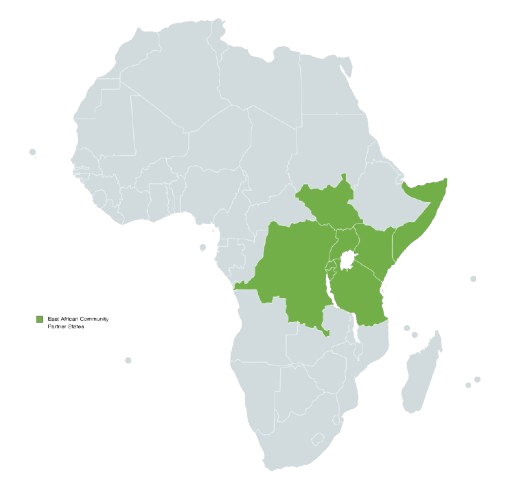
East African Community (EAC). (n.d.). Overview of EAC. Retrieved March 12, 2025, from https://www.eac.int/overview-of-eac
Britannica. (n.d.). Eastern Africa. Encyclopædia Britannica. Retrieved March 12, 2025, from https://www.britannica.com/place/eastern-Africa
Britannica. (n.d.). Africa: Climate. Encyclopædia Britannica. Retrieved March 12, 2025, from https://www.britannica.com/place/Africa/Climate
The Organization for World Peace (OWP). (n.d.). Somali civil war. The OWP. Retrieved March 12, 2025, from https://theowp.org/crisis_index/somali-civil-war/
BASF Agricultural Solutions. (n.d.). Crop protection: Crops. BASF. Retrieved March 12, 2025, from https://agriculture.basf.us/crop-protection/crops.html
Solidaridad Network. (2024, January 19). Time to embrace an inclusive multi-stakeholder approach in the East African tea sector. Solidaridad. Retrieved March 12, 2025, from https://www.solidaridadnetwork.org/news/time-to-embrace-an-inclusive-multi-stakeholder-approach-in-the-east-african-tea-sector/
Farmers Review Africa. (2024, January 18). Food safety: Critical element of trade in safe agro-food commodities in East Africa. Retrieved March 12, 2025, from https://farmersreviewafrica.com/food-safety-critical-element-of-trade-in-safe-agro-food-commodities-in-east-africa/
Rhino Africa. (n.d.). East Africa travel destinations. Rhino Africa. Retrieved March 12, 2025, from https://www.rhinoafrica.com/en/destinations/east-africa/21680
CGIAR Research Program on Climate Change, Agriculture and Food Security. (n.d.). Building livelihoods and resilience to climate change in East and West Africa. CGIAR. Retrieved March 14, 2025, from https://ccafs.cgiar.org/building-livelihoods-and-resilience-climate-change-east-and-west-africa